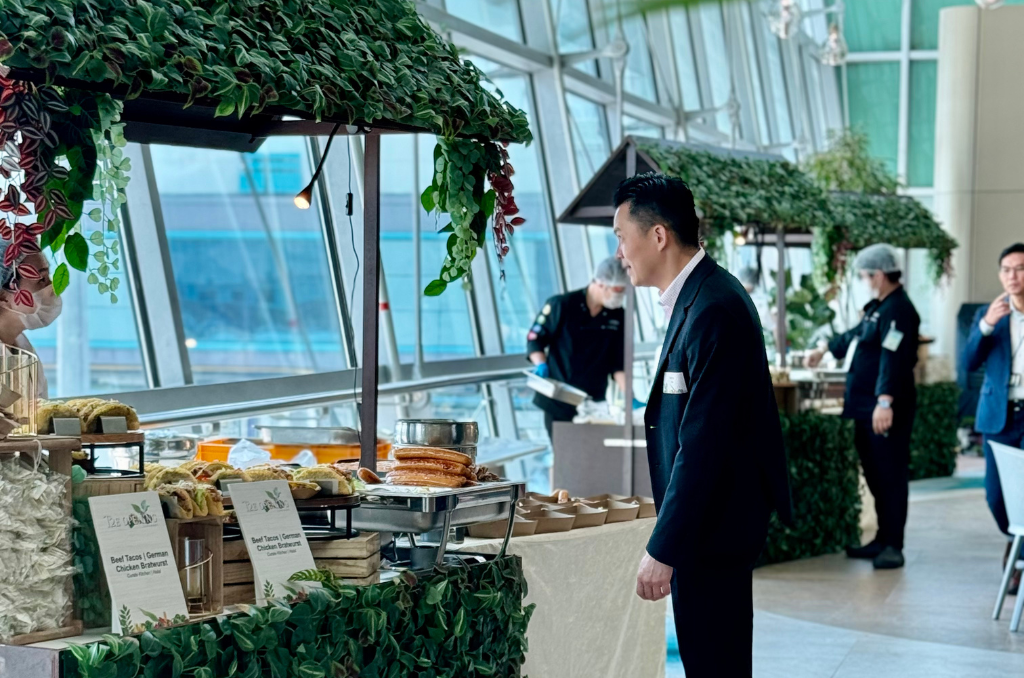
Experiential catering in Singapore is an approach to event catering where food becomes part of what guests see, do and remember — not simply something they eat.
For event planners, this means looking beyond the menu. Live preparation, interactive food stations, thoughtful presentation and engaging service can all contribute to the atmosphere of an event.
This can work particularly well for corporate launches, networking events, employee celebrations and other occasions where guest interaction matters.
The key question is simple: What role should the food play in the guest experience?
Experiential catering Singapore concepts combine food and service with elements of interaction, presentation and live experience, making catering an active part of an event.
Traditional event catering generally centres on providing food efficiently and appropriately for the occasion. An experiential approach builds on those fundamentals by considering the moments created around the food.
For example, at an interactive food station, guests may see food being prepared, assembled or finished in front of them. They can observe the process, interact with the service team and experience the sights, aromas and movement around the station before taking their first bite.
Experiential catering can include:
The objective is not simply to add spectacle. It is to create a food experience that makes sense within the wider event.
Yea! Mama’s own approach reflects this idea of food as an experience that brings people together, with catering options ranging from buffets and canapés to interactive live stations.
The main difference is the role food plays during the event.
Traditional Catering | Experiential Catering |
Food is primarily provided for guests to eat | Food also contributes to the event experience |
Preparation often happens away from guests | Some preparation or finishing may be visible |
Guests mainly interact with the finished food | Guests may interact with chefs, stations or the preparation process |
Presentation supports the meal | Presentation can become part of the event environment |
Service focuses largely on feeding guests smoothly | Service considers both operational flow and guest engagement |
Catering may sit alongside the programme | Catering can become part of the programme or atmosphere |
Traditional catering is not inherently less interesting or less suitable. A well-planned buffet may be exactly what an event needs.
Traditional catering is not less suitable. A well-planned buffet may be exactly what an event needs.
Experiential catering simply asks an additional question beyond “What should we serve?”
“How should guests experience the food?”
Several elements can turn catering into a more active part of an event.
Live Preparation and Interaction
Live preparation gives guests something to see before they eat.
With live station catering in Singapore, chefs prepare or finish food in front of guests. This introduces movement, aroma and interaction into the space.
Interactive food stations can also become natural gathering points. At networking events or company celebrations, guests have a reason to pause, watch and talk while waiting for their food.
This is where food as entertainment can work naturally without requiring a separate performance.
Presentation
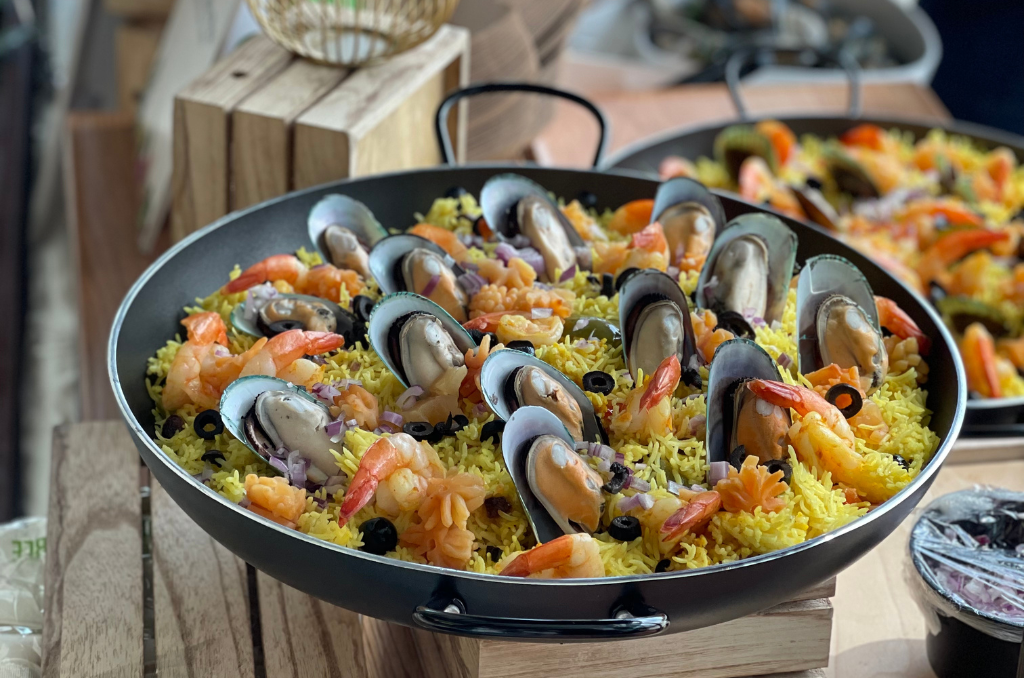
Live preparation gives guests something to see before they eat.
With live station catering in Singapore, chefs prepare or finish food in front of guests. This introduces movement, aroma and interaction into the space.
Interactive food stations can also become natural gathering points. At networking events or company celebrations, guests have a reason to pause, watch and talk while waiting for their food.
This is where food as entertainment can work naturally without requiring a separate performance.
Personalisation and Service
Giving guests an element of choice can make the experience feel more individual. Depending on the concept, they might select between options or receive something prepared at the point of service.
The service journey should also remain simple:
Approach → interact → receive food → return naturally to the event.
More interaction is not always better. The right balance depends on guest count, service time and the event format.
Food is one of the few event elements that almost every guest will encounter. Making that interaction more thoughtful can support the wider event experience.
It can encourage interaction. Interactive stations give guests natural places to gather, making them particularly useful for networking events and social corporate occasions.
It can add energy. Live preparation introduces movement and activity without adding another scheduled programme segment.
It can create memorable moments. Guests may forget individual menu items but remember seeing something prepared or gathering around a station with colleagues.
It can support the event format. A buffet, roaming canapés and a live station each influence how guests move and interact differently.
For example, canapés and live stations can suit receptions where guests are expected to circulate, while an efficient buffet may work better when a large group needs to eat within a defined break.
No. Live stations are one form of experiential catering, while experiential catering is the broader concept.
Live stations create an experience through visible preparation and guest interaction. However, live cooking is not the only way to make catering experiential.
Canapés can support a networking-focused event by allowing guests to eat while circulating. A thoughtfully arranged buffet can also contribute through its presentation, layout and service.
The format is the tool. The experience comes from how the catering fits into the event.
Start with the event objective rather than the menu.
Consider:
These factors help determine how interactive the catering should be.
For example, a networking reception may benefit from canapés and one interactive station. A larger event could use a buffet for efficient main meal service while adding a live station as a focal point.
Experiential catering does not mean every dish needs a performance. Often, one well-planned interactive element is enough.
For corporate planners, marketing teams, HR teams and event agencies considering experiential catering in Singapore, the aim is not to make every meal theatrical. It is to make the catering intentional.
Yea! Mama offers event catering formats including buffets, canapés and interactive live station catering, allowing planners to choose a service style that fits their event.
Explore Yea! Mama Experiential Catering to find a catering format that supports the atmosphere and guest experience you want to create.
Get in touch with us today and let us help you create a buffet experience your guests will truly enjoy and remember.
Copyright 2025 Yea! Mama Experiential Catering All rights reserved